

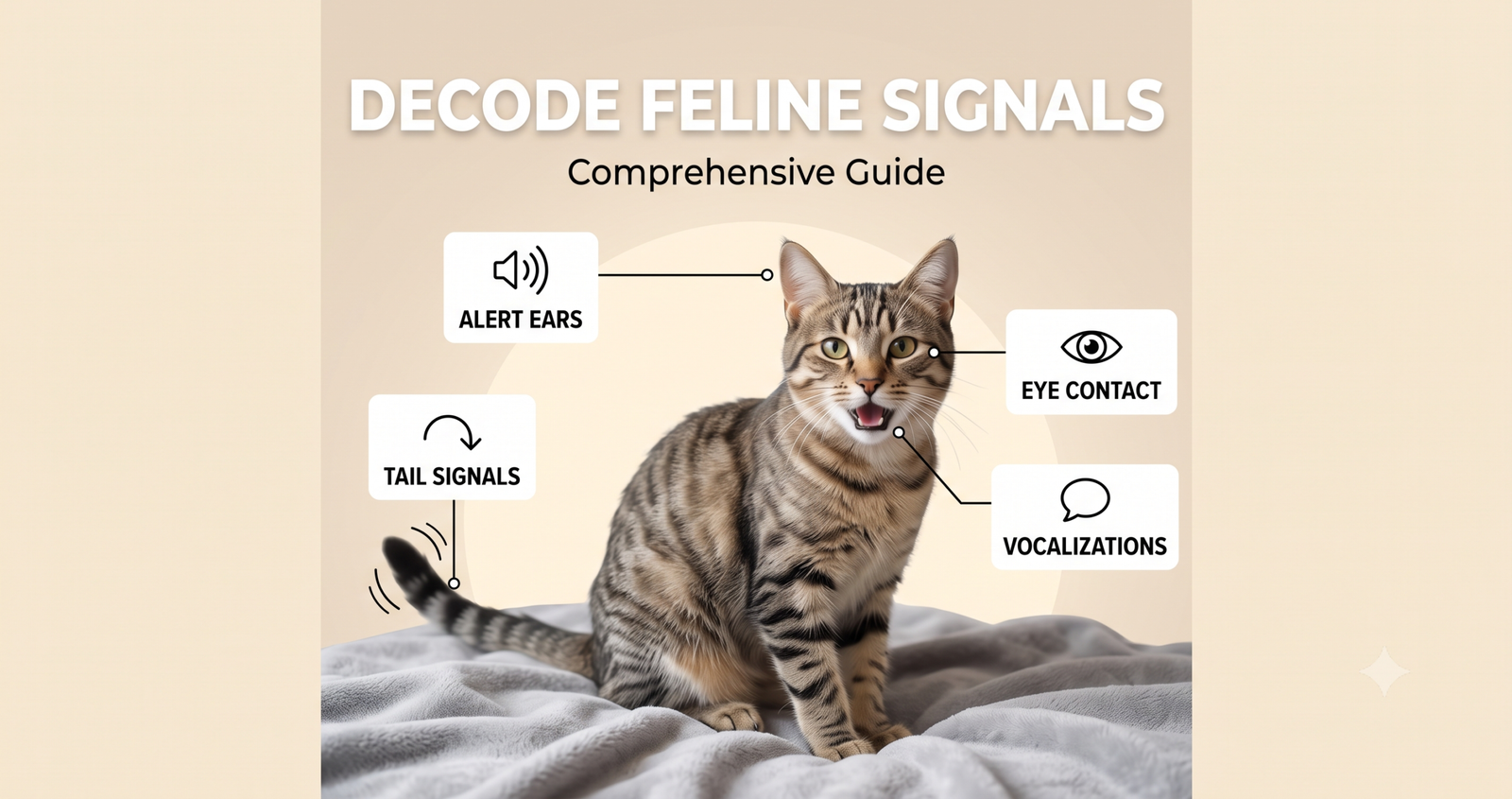
Cats communicate with body language, vocal sounds, scent, touch, and eye signals.
If you’ve ever wondered how cats communicate, the answer is more layered than most people think. Cats are subtle, expressive, and often misunderstood, which is why reading their signals can make daily life much easier for both you and your pet. I’ve spent years observing cat behavior in homes and shelter settings, and the biggest lesson I’ve learned is simple: once you understand feline communication, you start seeing the whole cat, not just the meow.
How cats communicate
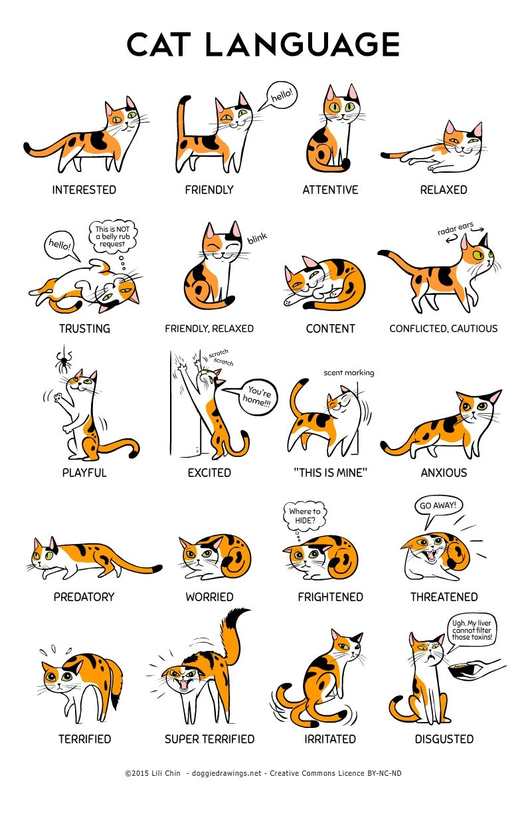
How cats communicate is a mix of movement, sound, smell, and behavior. Unlike dogs, cats rarely say everything out loud. They tend to send small clues, and those clues build a full message when you pay attention to the whole picture.
A cat may use its tail, ears, posture, whiskers, and eyes at the same time. It may also add a meow, purr, chirp, hiss, or rub against you to make the message clearer. In my experience, the biggest mistakes happen when people focus on only one signal. A purring cat can still be stressed, and a quiet cat may still be deeply affectionate.
The main ways cats communicate
Cats use several channels at once, almost like speaking in layers. This is why learning how cats communicate takes a little practice, but it also makes the bond much stronger.
• Body language: posture, tail position, ear angle, and whisker direction
• Vocal sounds: meows, purrs, trills, chirps, growls, and hisses
• Scent marking: rubbing, scratching, and urine marking
• Touch and proximity: head bunting, kneading, following, or sitting close
• Eye contact: slow blinks, staring, and pupil changes
Research in feline behavior shows that cats are highly responsive to social context. In plain terms, the same signal can mean different things depending on the situation. A raised tail can mean confidence, but if the body is tense and the ears are flat, that same cat may be uneasy.
Cat body language: the silent part of communication
Body language is the heart of how cats communicate. It is often more honest than sound because cats cannot hide tension in their posture for long. If you learn the body first, the rest becomes much easier.
A relaxed cat usually looks loose and soft. Its muscles are not tight, its tail may rest gently, and its ears point forward or slightly to the side. A worried cat, on the other hand, may crouch low, tuck its tail, or make itself look smaller.
Tail signals and what they mean
The tail is one of the easiest ways to read how cats communicate. It acts like a flag for mood.
• Tail straight up: friendly, confident, or happy to see you
• Tail quivering: strong excitement, often greeting behavior
• Tail tucked: fear, stress, or submission
• Tail flicking side to side: irritation, alertness, or possible overstimulation
• Puffed-up tail: fear or an attempt to look bigger
One common mistake is assuming tail wagging means the same thing it does in dogs. In cats, fast tail movement usually means the cat is getting annoyed or is mentally overloaded.
Ear position matters
Ears are small, but they say a lot. They help show whether a cat is calm, alert, or defensive.
• Ears forward: interested and relaxed
• Ears slightly rotated: listening and assessing
• Ears flattened sideways or back: fear, stress, or anger
• Ears twitching often: overstimulated or uneasy
I once worked with a rescue cat that seemed “fine” because it never hissed. But its ears were pinned back every time people approached too quickly. That cat was not calm at all. It was telling us, very clearly, to slow down.
Eyes, whiskers, and posture
Cats also communicate with their eyes and whiskers. A soft, half-closed eye usually signals comfort. Slow blinking is often a friendly gesture, especially when paired with a relaxed body.
Whiskers tell their own story, too. Forward whiskers can mean curiosity or excitement, while whiskers pulled back may suggest fear or caution. If a cat’s body is low and tense, the whole message is usually defensive, even if the face looks still.
Cat vocal sounds and what they mean
Cats are famous for meowing, but meows are only one piece of the puzzle. When it comes to how cats communicate, sound often works best with body language, not alone.
Cats use vocal sounds more often with humans than with other cats. Many experts believe domestic cats learned that people respond to vocal cues, so they adapted their sounds for daily life with us. That is one reason your cat may “talk” more at home than outside with other cats.
Common cat sounds
• Meow: a general social sound, often used with humans
• Short chirp or trill: greeting, excitement, or invitation to follow
• Purr: usually comfort, but sometimes self-soothing during pain or stress
• Hiss: fear, warning, or a request for space
• Growl: stronger warning and possible conflict
• Yowl: distress, mating behavior, disorientation, or illness in some cases
A purr is often misunderstood. Many people assume purring always means a cat is happy, and that is not always true. A cat may purr while being petted, but it may also purr at the vet, during injury, or when anxious. Context matters more than the sound alone.
Why cats meow at people
Cats often meow to get something from us. That might be food, attention, play, a door opening, or just a social exchange. Some cats develop a wide vocal range because their people respond to it.
In my own work, I’ve noticed that cats living with attentive owners often become more talkative. They learn that a certain meow opens the door, while another gets breakfast a little faster. That is not manipulation in a bad way. It is smart communication.
Scent marking and chemical communication
Scent is a huge part of how cats communicate, even though humans can barely notice it. Cats leave chemical messages through glands on their face, paws, and body. These messages help them feel safe in their space and recognize familiar friends.
This is one reason cats rub against furniture, door frames, people, and other pets. They are not just being cute. They are mixing their scent with the world around them.
Common scent behaviors
• Face rubbing: marking safe objects and people
• Head bunting: social bonding and scent sharing
• Scratching: both scent marking and claw maintenance
• Rolling: comfort, confidence, and sometimes attention seeking
• Urine spraying: territorial marking or stress response
Scent marking helps reduce uncertainty. A cat that smells its own scent in the home may feel more settled. In multi-cat homes, poor scent sharing can lead to tension, even if the cats never fight directly.
How cats communicate with humans
Cats communicate with humans in ways that are often more intentional than people realize. They watch our habits closely. Over time, they learn which sounds, motions, and routines matter.
A cat may sit by the food cabinet at dinner time, rub your leg when you grab your shoes, or stare at the door before you even reach for the leash. These are all examples of learned communication. Cats are excellent pattern readers.
Common human-directed signals
• Meowing near food bowls or doors
• Following you from room to room
• Bunting your hand or face
• Kneading blankets or your lap
• Bringing toys as an invitation to play
• Sleeping nearby as a sign of trust
One practical tip: respond consistently. If you sometimes reward a behavior and sometimes ignore it, your cat may become more vocal or persistent. Clear routines make communication easier for both of you.
What your cat is trying to tell you
Cats often communicate basic needs in simple ways.
• Hunger: vocalizing near feeding areas, rubbing, or leading you
• Stress: hiding, flattened ears, dilated pupils, or sudden silence
• Desire for attention: pawing, meowing, or sitting on your things
• Discomfort: avoiding touch, tail flicking, or crouching
• Trust: slow blinks, relaxed posture, and seeking closeness
The more you know your cat’s normal behavior, the easier it is to notice changes. That is one of the most useful parts of learning how cats communicate: it helps you spot trouble early.
How cats communicate with other cats
Cats do communicate with other cats, but they usually do it with less noise and more subtlety than they do with humans. Their social style depends on personality, early experiences, and whether they grew up around other cats.
Some cats are social and affectionate with feline companions. Others prefer distance. Both can be normal.
Social signals between cats
• Slow approach: non-threatening interest
• Side-by-side sitting: peaceful coexistence
• Nose touching: greeting and information exchange
• Allogrooming: bonding and trust
• Tail up while approaching: friendly intent
• Turning away or blinking: de-escalation
Cats often avoid direct conflict if possible. A stare, a stiff body, or blocking a doorway can create tension long before a fight starts. That is why household cat introductions should be slow and careful.
Reading cat communication in real life
The best way to understand how cats communicate is to read the full scene, not one signal. Think of it like reading a sentence instead of one word. A single purr means less than a purr plus relaxed paws, soft eyes, and a loose tail.
Here’s a simple approach I use when observing a cat:
- Look at the whole body, not just the face.
- Notice the ears, tail, and whiskers together.
- Listen to the sound and match it to the posture.
- Check the setting, because context changes meaning.
- Compare it to the cat’s usual behavior.
This method prevents a lot of confusion. I’ve seen people pet a tense cat because it was purring, then wonder why the cat swatted. The cat was not being “mean.” It was saying, in its own language, “I’ve had enough.”

Why understanding cat communication matters
Learning how cats communicate improves life on both sides. It lowers stress, prevents bites and scratches, and helps you respond before small problems grow. It also builds trust.
Cats feel safer when they are understood. That safety shows up in better behavior, smoother vet visits, stronger bonding, and more relaxed daily routines. For adopted cats, especially shy or undersocialized ones, this can make a huge difference.
Understanding cat language also helps you notice medical issues. If a normally social cat hides, hunches, or stops vocalizing, that can be a sign of pain or illness. Trusted veterinary groups often stress that behavior changes are worth paying attention to, especially if they appear suddenly.
Common mistakes people make
Even experienced cat lovers misread signals sometimes. The good news is that most mistakes are easy to fix once you know what to watch for.
• Assuming purring always means happiness
• Treating all tail movement like dog tail wagging
• Petting a cat after it shows clear signs of overstimulation
• Ignoring sudden behavior changes
• Forcing interaction instead of letting the cat choose
A better approach is to let the cat set the pace. Offer your hand, pause, and watch the response. If the cat leans in, that is a good sign. If it moves away, that is also useful information.
Tips for communicating better with your cat
You do not need to speak “cat” perfectly to improve your bond. Small habits go a long way.
• Use a calm voice and slow movements
• Let your cat come to you first
• Watch for tail, ear, and eye changes
• Keep feeding and play routines steady
• Use slow blinks to show friendliness
• Give space when your cat turns away
• Reward calm, relaxed behavior
Think of it like learning a new dialect. At first, you catch only a few words. Then one day, you realize you understand much more than before. Cats are patient teachers if we are patient students.
Frequently Asked Questions of how cats communicate
Why does my cat meow so much?
Cats meow for many reasons, including hunger, boredom, attention, or a learned habit. Some breeds and individual cats are naturally more vocal than others.
Do cats understand human emotions?
Cats may not understand feelings the same way humans do, but they often notice tone, posture, and routine changes. Many cats respond to stress or sadness by staying close, hiding, or acting differently.
Why does my cat stare at me?
A cat may stare to read your behavior, ask for something, or simply observe its environment. If the stare is soft and relaxed, it is often neutral or friendly, but a hard stare with a tense body may signal discomfort.
Is purring always a sign of happiness?
No, purring can also happen during stress, pain, or illness. It is best to look at the cat’s body language and situation before deciding what the purr means.
How can I tell if my cat trusts me?
Signs of trust include slow blinking, kneading, sleeping near you, head bunting, and relaxed body posture. A cat that chooses to stay close without feeling trapped is usually showing real comfort.
Why do cats rub against people?
Cats rub against people to share scent and mark them as part of their safe space. It is also a social gesture that can mean affection, comfort, or a request for attention.
Conclusion
How cats communicate is a mix of sound, body language, scent, and trust. Once you learn to read those signals together, your cat’s behavior starts to make a lot more sense. You will also be better at spotting stress, meeting needs, and building a calmer home.
The best part is that you do not need to become an expert overnight. Start by watching your cat more closely, notice patterns, and respond with patience. If you want a stronger bond with your cat, begin today by paying attention to the small signals that speak the loudest.
If this guide helped you, keep learning, observe your cat with fresh eyes, and share your own experiences in the comments.